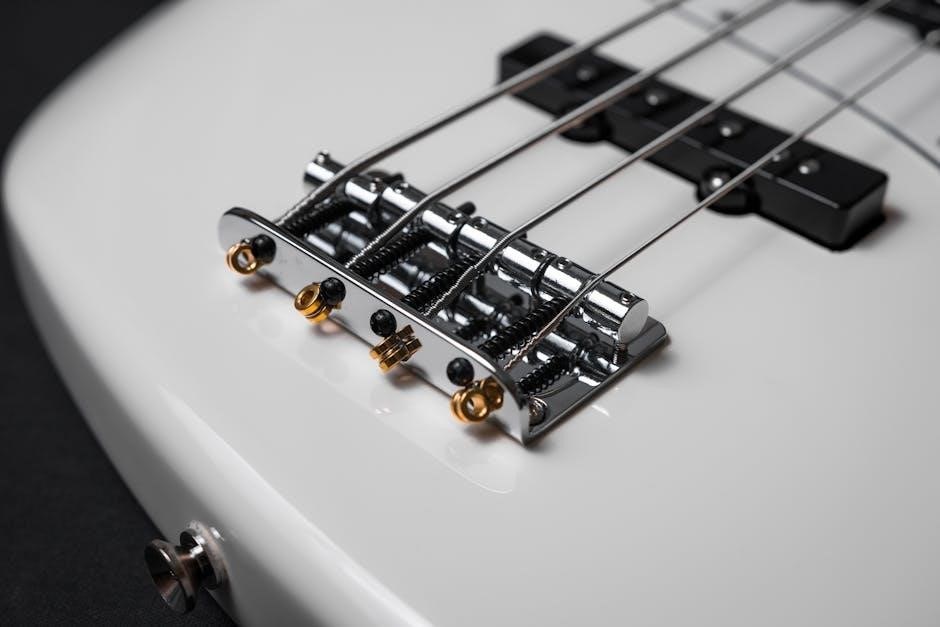
Guitar String Guide: A Comprehensive Overview (Updated 02/19/2026)
Today’s date is 02/19/2026! This guide explores everything about guitar strings, helping you discover the perfect set for acoustic, electric, or nylon-string guitars.
Guitar strings are the vital link between you and your instrument, profoundly impacting tone, playability, and overall musical expression. Choosing the right strings can transform an unplayable guitar into a joy to experience, addressing issues like stiff strings and high action often mistaken for poor craftsmanship.
This comprehensive guide delves into the world of guitar strings, covering everything from the diverse types of guitars and their corresponding string requirements – acoustic, electric, and classical – to the intricacies of string materials, gauges, and construction. We’ll explore the nuances of steel, nickel, and nylon strings, alongside variations like stainless steel and phosphor bronze.
Understanding string gauges – light, medium, and heavy – is crucial for tailoring playability to your style. Furthermore, we’ll unravel the differences between roundwound and flatwound strings, and the benefits of coated versus uncoated options. Finally, we’ll provide practical advice on changing strings and extending their lifespan through proper maintenance.
Types of Guitars and Corresponding Strings
Selecting the correct strings is paramount, directly linked to the type of guitar you play. Each guitar style – acoustic, electric, and classical – demands specific string characteristics to optimize performance and tonal qualities. Acoustic guitars generally utilize steel strings, designed to withstand higher tension and deliver a bright, resonant sound. However, variations exist within acoustic strings themselves, impacting tone and feel.
Electric guitars, conversely, typically employ nickel strings, known for their warmer tone and compatibility with magnetic pickups. These strings offer a different tactile experience compared to steel. Classical guitars, traditionally, use nylon strings, providing a softer, mellower tone ideal for classical and fingerstyle playing.
Understanding these fundamental pairings is the first step towards achieving optimal sound and playability. We will explore each guitar type and its ideal string choices in greater detail throughout this guide.

2;1 Acoustic Guitar Strings
Acoustic guitar strings are primarily steel-based, engineered to deliver the bright, projecting tone acoustic guitars are known for. However, “steel” encompasses a range of alloys, each influencing the string’s sound and longevity. Many players encounter acoustic guitars feeling difficult to play due to stiff strings and high action, often stemming from incorrect string choice rather than poor construction.
Common types include bronze, phosphor bronze, and coated varieties. Bronze strings offer a bright, crisp tone, while phosphor bronze provides a warmer, richer sound with extended life. Coated strings feature a protective layer, resisting corrosion and extending string lifespan, though some perceive a slight tonal difference.
Choosing the right acoustic strings involves considering your playing style, desired tone, and budget. Experimentation is key to finding the perfect match for your instrument and preferences.
2.2 Electric Guitar Strings
Electric guitar strings differ significantly from acoustic strings, primarily utilizing nickel-plated steel or stainless steel alloys. These materials contribute to a warmer, more sustained tone, ideal for the amplified sound of electric guitars. Unlike the broad tonal palette sought in acoustics, electric guitarists often prioritize sustain, output, and responsiveness to effects.

Nickel strings are a popular choice, offering a balanced tone with good warmth and clarity. Stainless steel strings provide a brighter, more aggressive sound with increased durability and resistance to corrosion. The winding type – roundwound or flatwound – also dramatically impacts the string’s feel and tonal characteristics.

Selecting electric guitar strings involves considering your genre, playing style, and desired tonal color. Heavier gauges offer more sustain and volume, while lighter gauges provide easier bending and faster playing.
2.3 Classical/Nylon-String Guitar Strings
Classical guitars exclusively utilize nylon strings, diverging sharply from the steel or nickel strings found on acoustic and electric instruments. These strings produce a warm, mellow tone, perfectly suited for classical, flamenco, and fingerstyle genres. Unlike steel strings, nylon strings have lower tension, making them gentler on the fingers and the guitar’s neck.
Nylon strings are constructed differently, typically featuring a nylon core wrapped with silver-plated copper. The bass strings utilize a multi-filament nylon core for increased stability and resonance. String tension plays a crucial role; variations impact playability and tonal projection.
Choosing nylon strings involves considering the desired tone and responsiveness. Higher tension strings offer more volume and projection, while lower tension strings provide easier playability and a softer tone.
Understanding String Materials
The material composing a guitar string profoundly impacts its tone, feel, and longevity. Different guitar types necessitate distinct materials to optimize performance. Steel reigns supreme for acoustic guitars, delivering brightness and projection. Electric guitars commonly employ nickel, known for its warm, balanced tone, though stainless steel offers enhanced durability and clarity.
Classical guitars, as previously noted, rely exclusively on nylon for its soft, mellow character. Phosphor bronze, a popular acoustic string alloy, provides a rich, complex tone with excellent sustain. Stainless steel strings resist corrosion, extending string life and maintaining tonal consistency.
Material choice isn’t solely about tone; it also affects playability and string lifespan. Understanding these nuances empowers guitarists to select strings that perfectly complement their instrument and playing style.
3.1 Steel Strings (for Acoustic Guitars)
Steel strings are the standard for acoustic guitars, providing the bright, resonant tone most players associate with the instrument. They deliver powerful projection and clarity, making them ideal for strumming, fingerpicking, and various acoustic genres. However, steel strings can be harder on fingers, especially for beginners, requiring more finger strength and calluses.
Different steel string alloys exist, each offering unique tonal characteristics. 80/20 bronze strings are known for their brilliant, crisp sound, while phosphor bronze strings provide a warmer, more balanced tone with extended lifespan. String gauges also influence playability and volume; lighter gauges are easier to bend, while heavier gauges offer more projection.
Properly maintaining steel strings involves wiping them down after each use to remove oils and debris, preserving their tone and preventing corrosion.
3.2 Nickel Strings (for Electric Guitars)
Nickel strings are a popular choice for electric guitars, renowned for their warm, balanced tone and smooth feel. They offer a vintage-inspired sound, often favored by players of blues, jazz, and classic rock. Compared to steel strings, nickel strings are generally easier on the fingers, making them a comfortable option for extended playing sessions.

Pure nickel strings deliver a particularly mellow and rounded tone, while nickel-plated steel strings provide a brighter sound with increased output. The winding type – roundwound, flatwound, or halfwound – further influences the string’s tonal characteristics and playing experience. Roundwound strings offer the most brightness and sustain, while flatwound strings provide a smoother, warmer tone with reduced finger noise.
Regular cleaning with a string cleaner will help maintain the nickel strings’ tonal clarity and longevity.
3.3 Nylon Strings (for Classical Guitars)
Nylon strings are the standard for classical and flamenco guitars, providing a warm, mellow tone distinctly different from steel or nickel strings. Unlike their metal counterparts, nylon strings have a lower tension, making them easier on the fingers – ideal for beginners or players seeking a comfortable playing experience. They are constructed from various nylon formulations, each impacting the string’s tone and responsiveness.
Traditionally, the treble strings (E, B, G) are made from clear nylon monofilament, while the bass strings (D, A, E) feature a nylon core wrapped with silver-plated copper winding. This construction provides both clarity and resonance. String gauge affects playability and tone; lighter gauges are easier to fret but produce less volume, while heavier gauges offer more projection.
Nylon strings are less susceptible to corrosion than metal strings, but still benefit from regular wiping down after playing.
3.4 Stainless Steel Strings
Stainless steel strings represent a premium option for electric guitarists, prized for their bright, articulate tone and exceptional longevity. Unlike nickel-plated steel, stainless steel resists corrosion remarkably well, extending string life significantly and maintaining consistent tone for longer periods. This makes them a cost-effective choice despite their higher initial price point.
The inherent hardness of stainless steel contributes to a crisp, clear attack and enhanced sustain. However, this hardness also means they can be harder on frets, potentially requiring more frequent fret maintenance over time. Stainless steel strings are often favored by players who frequently bend strings, as they offer excellent tuning stability.
They deliver a modern, aggressive sound, well-suited for rock, metal, and other genres where clarity and punch are paramount.
3.5 Phosphor Bronze Strings
Phosphor bronze strings are the most popular choice for acoustic guitars, renowned for their warm, balanced tone and excellent projection. An alloy of copper and tin, with a small addition of phosphorus, these strings offer a rich harmonic complexity that complements the natural resonance of acoustic instruments. The phosphorus element slows down corrosion, extending string life compared to traditional bronze strings.
Phosphor bronze strings deliver a full, vibrant sound across the entire frequency spectrum, making them versatile for various playing styles – from fingerpicking to strumming. They are particularly well-suited for recording, capturing a natural and nuanced acoustic tone.
While they don’t last quite as long as some coated options, their tonal qualities and affordability make them a staple for acoustic guitarists worldwide.
String Gauges: What Do the Numbers Mean?

String gauge refers to the thickness of the strings, measured in thousandths of an inch. Typically represented by three numbers (e.g., .012-.053), the first number indicates the high E string’s gauge, and the last represents the low E string. Heavier gauges produce a louder, fuller tone with more sustain, but require more finger strength to play.
Lighter gauges are easier to bend and fret, making them ideal for beginners or players who prefer a more effortless playing experience. However, they can sound thinner and lack the resonance of heavier strings. Choosing the right gauge depends on your playing style, guitar type, and personal preference.
Experimenting with different gauges is crucial to finding what feels and sounds best for you and your instrument.
4.1 Light Gauge Strings
Light gauge strings, typically ranging from .008 to .047 on electric guitars and .012 to .053 on acoustic guitars, are a popular choice for beginners and players prioritizing ease of playability. They require less finger strength to fret and bend, making them comfortable for extended practice sessions and complex techniques.
These strings offer a brighter, more articulate tone, often favored in genres like blues, pop, and rock. However, light gauge strings can sometimes lack the fullness and projection of heavier gauges, particularly on larger-bodied acoustic guitars. They also tend to wear out faster due to their thinner core.
Despite these drawbacks, their playability makes them an excellent starting point for many guitarists.
4.2 Medium Gauge Strings
Medium gauge strings, generally falling between .010 to .046 for electrics and .013 to .056 for acoustics, strike a balance between playability and tonal richness. They offer a fuller, warmer sound compared to light gauge strings, providing more volume and sustain, especially beneficial for strumming and rhythm playing.
While requiring slightly more finger strength, medium gauge strings are still manageable for most players and offer improved tuning stability. They are a versatile choice suitable for a wide range of musical styles, including rock, country, and folk. Many experienced guitarists prefer medium gauges for their balanced characteristics.
They represent a solid compromise for players seeking both comfort and robust tone.
4.3 Heavy Gauge Strings
Heavy gauge strings, typically ranging from .011 to .052 for electric guitars and .014 to .059 or higher for acoustics, are favored by players prioritizing powerful tone and robust low-end response. These strings demand significant finger strength, making them ideal for experienced guitarists and those specializing in genres like jazz, blues, and heavy rock where bending and aggressive picking are common;
Heavy gauges deliver increased volume, sustain, and a thicker, more resonant sound. They also enhance tuning stability, particularly in lower tunings. However, they can be more challenging to play, requiring greater effort to fret notes and bend strings.
Consider these if you need maximum tonal impact and aren’t afraid of a workout!
String Construction & Winding Types
The construction and winding of a guitar string significantly impact its tone, feel, and playing experience. Core shapes are typically round or hexagonal, with hexagonal cores providing greater string grip and stability. The winding wire, wrapped around the core, determines much of the string’s character.
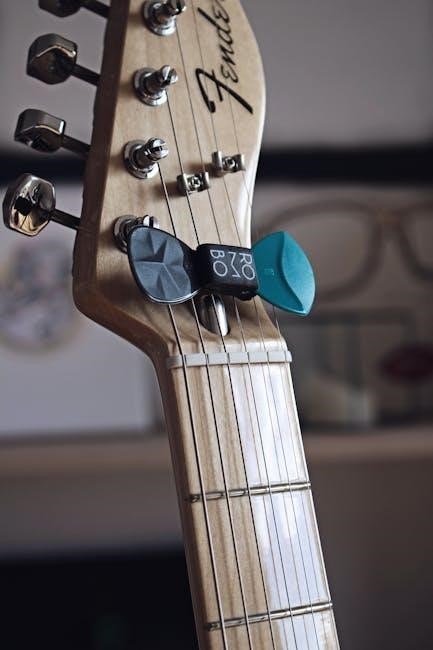
Roundwound strings are the most common, offering a bright, articulate tone with noticeable texture under the fingers. Flatwound strings, conversely, have a smooth, polished surface, producing a warmer, mellower sound favored by jazz musicians. They are also gentler on frets.
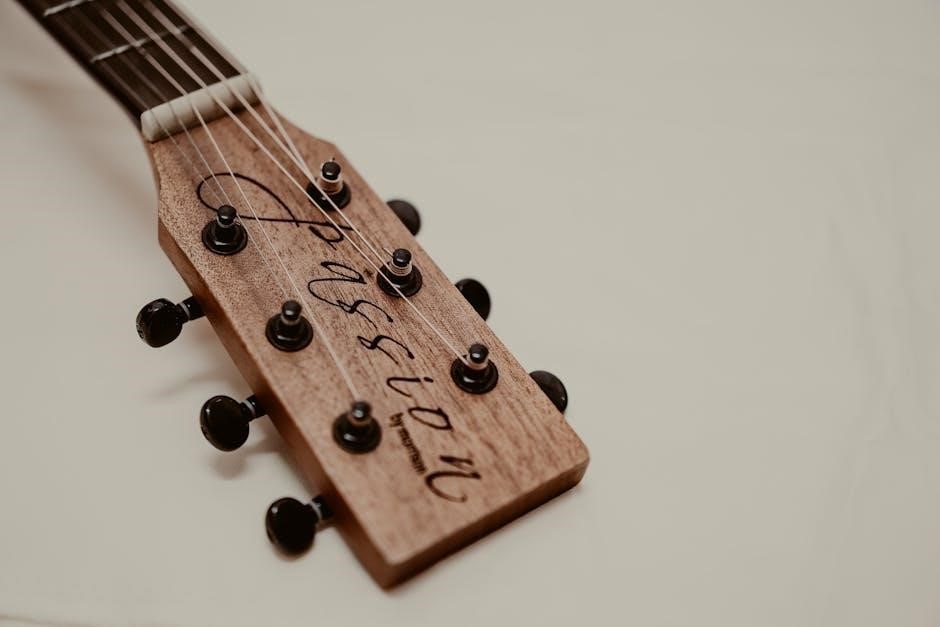
Half-rounds offer a compromise, with a slightly textured feel and a balanced tone. Understanding these differences allows you to select strings that complement your playing style and desired sound.
5.1 Roundwound Strings
Roundwound strings represent the industry standard, favored by a vast majority of guitarists across genres. Their construction involves wrapping a round wire tightly around a core wire, creating a distinct textured surface. This texture is the primary contributor to their characteristic bright, clear, and articulate tone.
The ridges of the roundwound winding enhance string vibration, resulting in increased harmonic content and a more pronounced attack. However, this texture can also lead to increased finger noise and faster fret wear compared to smoother string types.
Roundwounds are available in various materials, like nickel-plated steel or stainless steel, further influencing tonal characteristics. They’re ideal for rock, blues, country, and many other styles where clarity and punch are desired.
5.2 Flatwound Strings
Flatwound strings offer a significantly different playing experience and tonal palette compared to their roundwound counterparts. Constructed by wrapping a flat ribbon wire around the core wire, they present a remarkably smooth surface. This smoothness drastically reduces finger noise, making them exceptionally quiet under the fingers – a favorite among jazz musicians.
The flat winding minimizes harmonic overtones, resulting in a warmer, mellower, and more subdued tone. While they lack the bright attack of roundwounds, flatwounds deliver a rich, fundamental tone with excellent sustain. They also tend to be gentler on frets, extending their lifespan.
Historically popular in jazz, blues, and Motown, flatwounds are experiencing a resurgence among players seeking a vintage vibe and a unique sonic texture.
Coated vs. Uncoated Strings
The debate between coated and uncoated strings centers around longevity and tonal characteristics. Uncoated strings, the traditional choice, deliver a bright, vibrant tone right out of the package. However, they are susceptible to corrosion from sweat, oils, and humidity, leading to a shorter lifespan and diminished tone.

Coated strings, conversely, feature a microscopic polymer coating – often made of PTFE or similar materials – that shields the string from these corrosive elements. This coating significantly extends string life, maintaining a consistent tone for a longer period.
While coated strings offer durability, some players perceive a slight reduction in initial brightness. Modern coatings are designed to minimize this effect, providing a balance between protection and tone. Choosing depends on playing frequency and tonal preference.
How to Change Guitar Strings
Changing guitar strings is a fundamental skill for any guitarist, ensuring optimal tone and playability. Begin by detuning the strings completely to relieve tension. Using a string winder, loosen the old strings at the tuning pegs and remove them from the bridge.
Next, clean the fretboard with a suitable cleaner and cloth. Insert the new strings through the bridge, securing them appropriately for your guitar type. Wind the strings onto the tuning pegs, ensuring neat and even wraps.
Stretch the strings by gently pulling them away from the fretboard, retuning as needed. Repeat this process several times until the strings hold their tune. Trim the excess string ends at the tuning pegs and bridge for comfort and safety.

Extending String Life: Maintenance & Care
Maximizing the lifespan of your guitar strings significantly improves tone and reduces replacement frequency. After each playing session, wipe down the strings with a clean, soft cloth to remove oils, sweat, and debris. These contaminants corrode strings, dulling their sound.
Consider using string lubricants specifically designed for guitar strings; they reduce friction and prevent build-up. Avoid harsh cleaning chemicals, as they can damage the string coating or metal.
Wash your hands before playing to minimize oil transfer. Store your guitar in a case when not in use, protecting it from humidity and temperature fluctuations. Regular maintenance, even simple wiping, dramatically extends string life and preserves optimal performance.